

Last Updated: November 22, 2026
Quick Summary
No, can e-scooters be used on UK roads? For privately owned machines the answer is no: a private e-scooter is classed as a powered transporter and is illegal on public roads, pavements and cycle lanes. The only exception is a rental e-scooter hired through a government-approved trial scheme, ridden within its designated trial area.
- A privately owned e-scooter can only be ridden on private land, with the landowner's permission.
- Rental riders need a full or provisional driving licence and must meet the operator's minimum age.
- Riding on a pavement or footpath is illegal, whether the scooter is private or rented.
- A police stop can lead to a verbal warning, fixed penalty, court summons or seizure of the vehicle.
- Check the official e-scooter trial guidance, as trial areas and rules can change.
Table of Contents
- Can E-Scooters Be Used on UK Roads? The Short Answer
- Private E-Scooter Laws: What Applies to Scooters You Own
- Rental E-Scooter Rules and How the Trial Areas Work
- E-Scooter Pavement Laws and Where You Cannot Ride
- E-Scooter Driving Licence Requirements for Rental Riders
- Legal Requirements vs Illegal Use: A Summary Table
- What Happens at a Police Stop or After an Offence
- Using an E-Scooter on Private Land and in the Garden
- Choosing a Scooter That Matches Where You Can Legally Ride
- Frequently Asked Questions
Can E-Scooters Be Used on UK Roads? The Short Answer
No. If you are asking can e-scooters be used on UK roads, the answer for privately owned machines is a straightforward no. A privately owned e-scooter is classed as a powered transporter and is illegal to ride on public roads, pavements, cycle lanes and other public places. This guide sets out what the law says and where these machines can legally be used.
The only exception is a rental e-scooter hired through a government-approved trial scheme. Those can be ridden on public roads within their designated trial area, provided the rider meets the licence and age conditions.
The distinction matters. It is not the scooter that is banned; it is the combination of a privately owned machine and a public place. Keep reading and we will show you how to check any route before you ride, what happens if you are stopped, and how to enjoy a scooter legally on private land.
Private E-Scooter Laws: What Applies to Scooters You Own
Private e-scooter laws are stricter than most buyers expect. A privately owned e-scooter cannot legally be used on a public road, a pavement, a cycle lane or any other public place. It is treated as a motor vehicle under road traffic law, yet it cannot be registered, taxed or insured in the normal way, which is why public use is prohibited.
So where can you ride one? On private land, with the landowner's permission. That is the only lawful setting for a scooter you buy yourself.
Watch out: buying a scooter assuming you can commute on it is a common mistake. Buyers can discover the restriction only after delivery. Before you order, confirm you have private ground to ride on, and read the government guidance on powered transporters so you know exactly what applies.
Rental E-Scooter Rules and How the Trial Areas Work
Rental e-scooter rules are where legal public use sits, and the mechanism is more specific than most riders realise. Rental scooters may only be used in areas running a government-approved trial, and only when hired from an operator approved for that area. The scooter itself is not simply "a scooter"; it is a vehicle supplied under the trial framework, which is what gives it legal cover on public roads.
The trial framework sets conditions that both operators and riders must meet. In practice these cover:
- Vehicle standards, so the machines supplied meet the specification the trial requires
- Insurance, which the operator provides as part of the hire
- Where the scooters may be ridden, which is limited to roads and cycle lanes within the designated trial zone
- Rider eligibility, including the driving licence and minimum age conditions covered below
A useful way to think about it is that the legal permission attaches to the hire, not to the machine. Ride an approved rental scooter outside its trial area and the cover falls away. Ride a scooter you own, anywhere public, and there is no trial cover at all.
Trial status and boundaries are not fixed. Schemes have been extended, adjusted and closed over time, and the area covered by a scheme can be narrower than the town or city it is named after. Before you rely on a rental scooter for a journey, check the official e-scooter trial guidance for the current list of areas and the rules attached to each.
Watch out: a common mistake is assuming that because rental scooters are visible in a city centre, the whole city is covered. The permitted zone is usually defined precisely, and riding past its edge turns a legal hire into an illegal use.
The rules are not identical across the four nations. The practical position on rental scooters, and on private scooters in public places, can differ between England, Scotland, Wales and Northern Ireland. If you are travelling or moving between nations, check the guidance for the nation you will actually be riding in rather than treating the rules as uniform across the country.
E-Scooter Pavement Laws and Where You Cannot Ride
E-scooter pavement laws are unambiguous: riding on a pavement or footpath is illegal, whether the scooter is private or rented. Pavements are for pedestrians, and a scooter there is a prohibited use.
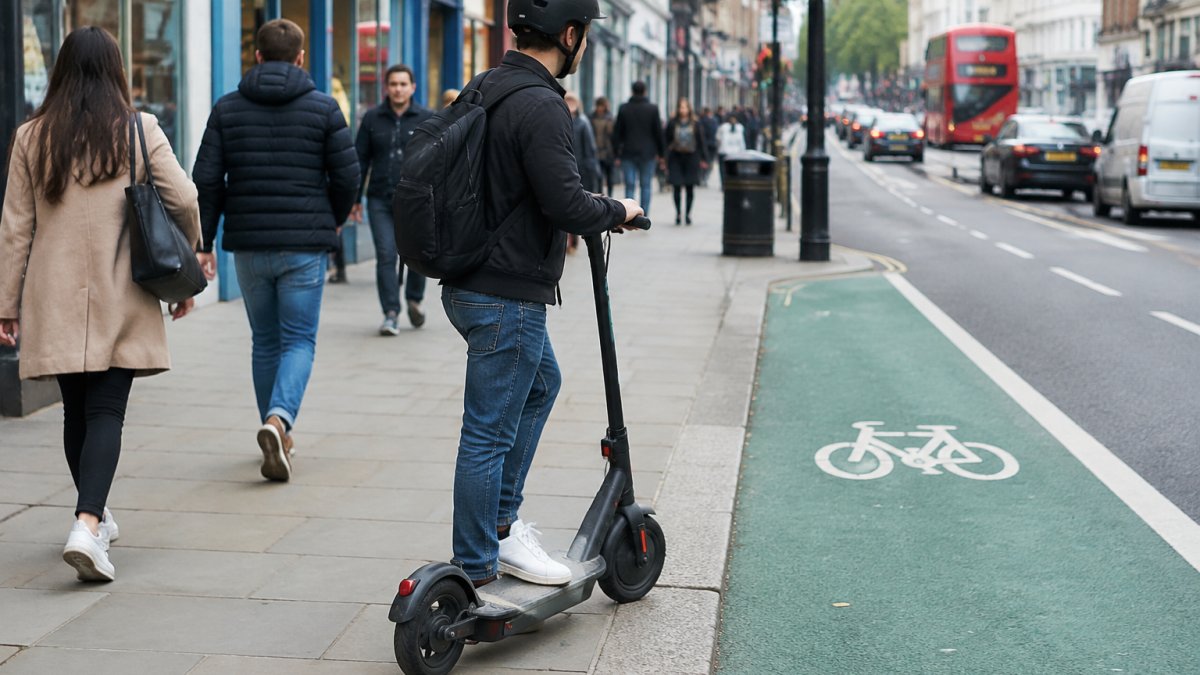
The list of places you cannot ride is longer than most people assume:
- Pavements and footpaths, including pedestrian areas
- Public roads, for privately owned scooters
- Motorways, in every circumstance
- Any public place, for a privately owned machine
Cycle lanes and cycle tracks are a grey area that catches riders out. Rental scooters may use them within a trial area; private scooters may not use them at all, because a cycle lane on a public road is still a public place.
E-Scooter Driving Licence Requirements for Rental Riders
E-scooter driving licence requirements apply to rental riders. To hire and ride a rental e-scooter legally, you need a full or provisional driving licence, and you must meet the operator's minimum age. You do not need a separate scooter licence, but the standard driving licence is the gate.
Riders should also expect to wear a helmet where the operator requires it and to follow the trial's riding restrictions. The operator will check your licence at hire.
If you hold only a provisional licence, confirm the operator accepts it before you travel to a hire point, since hire terms vary between schemes.
Legal Requirements vs Illegal Use: A Summary Table
The clearest way to see the difference is side by side. The table below sets out legal requirements against illegal use at a glance.
| Factor | Rental e-scooter (legal) | Privately owned e-scooter |
|---|---|---|
| Public road use | Permitted within trial area | Prohibited |
| Pavements and footpaths | Prohibited | Prohibited |
| Cycle lanes | Permitted in trial area | Prohibited |
| Motorways | Prohibited | Prohibited |
| Driving licence | Full or provisional required | Not applicable |
| Insurance | Provided by operator | Not available for public use |
| Where it can be used | Trial area public roads | Private land, with permission |
The pattern is consistent: public use belongs to the rental trial, and private ownership belongs on private ground.
What Happens at a Police Stop or After an Offence
Being stopped is a realistic possibility, and the enforcement picture is more structured than a simple warning. Because a privately owned e-scooter used in a public place is treated as an uninsured motor vehicle, a stop can engage several road traffic offences at once rather than a single scooter-specific rule.
The offences most commonly in play are:
- Using a motor vehicle on a road or other public place without insurance
- Driving otherwise than in accordance with a licence, where the rider has no licence covering the vehicle
- Using a vehicle that does not meet the required construction and use standards
A police officer who suspects one of these offences can require the rider to stop, ask for details, and take enforcement action. That action can range from a verbal warning through to a fixed penalty, a court summons, or seizure of the vehicle. Seizure powers exist for vehicles being used without insurance, and a scooter can be taken away and potentially crushed or otherwise disposed of. Where the rider holds a driving licence, an offence can also put points on it, and for newer drivers that can have consequences for the licence itself.
Watch out: riders sometimes assume a quiet residential street or a park path is a grey area where enforcement will not follow. It is not. A public road is a public road, and a public park is a public place, so the same offences apply.
If you are stopped, stay calm and cooperative. It is reasonable to ask which power is being used and what the next steps are, and to keep any paperwork you are given. Do not ride away or refuse to provide details, as that can add to the situation rather than resolve it.
For the legal framework behind enforcement, the Road Traffic Act 1988 is the starting point, and the government guidance on powered transporters explains how e-scooters are classified within it. Because enforcement practice and the trial arrangements can change, check the current guidance rather than relying on an account from a previous year.
Using an E-Scooter on Private Land and in the Garden
Private land is where a scooter you own makes complete sense. With the landowner's permission, you can ride on private ground, and a large garden is the classic setting for family fun.
This is where our own range fits. The ZIMX ZX APEX kids' electric scooter is built for exactly this: a 150W motor, a top speed of up to 10mph, solid puncture-proof tyres and a 5-mile battery range, ideal for zooming around the garden. For rougher ground, the ZIMX ZX Track dirt scooter handles off-road riding without electric power.
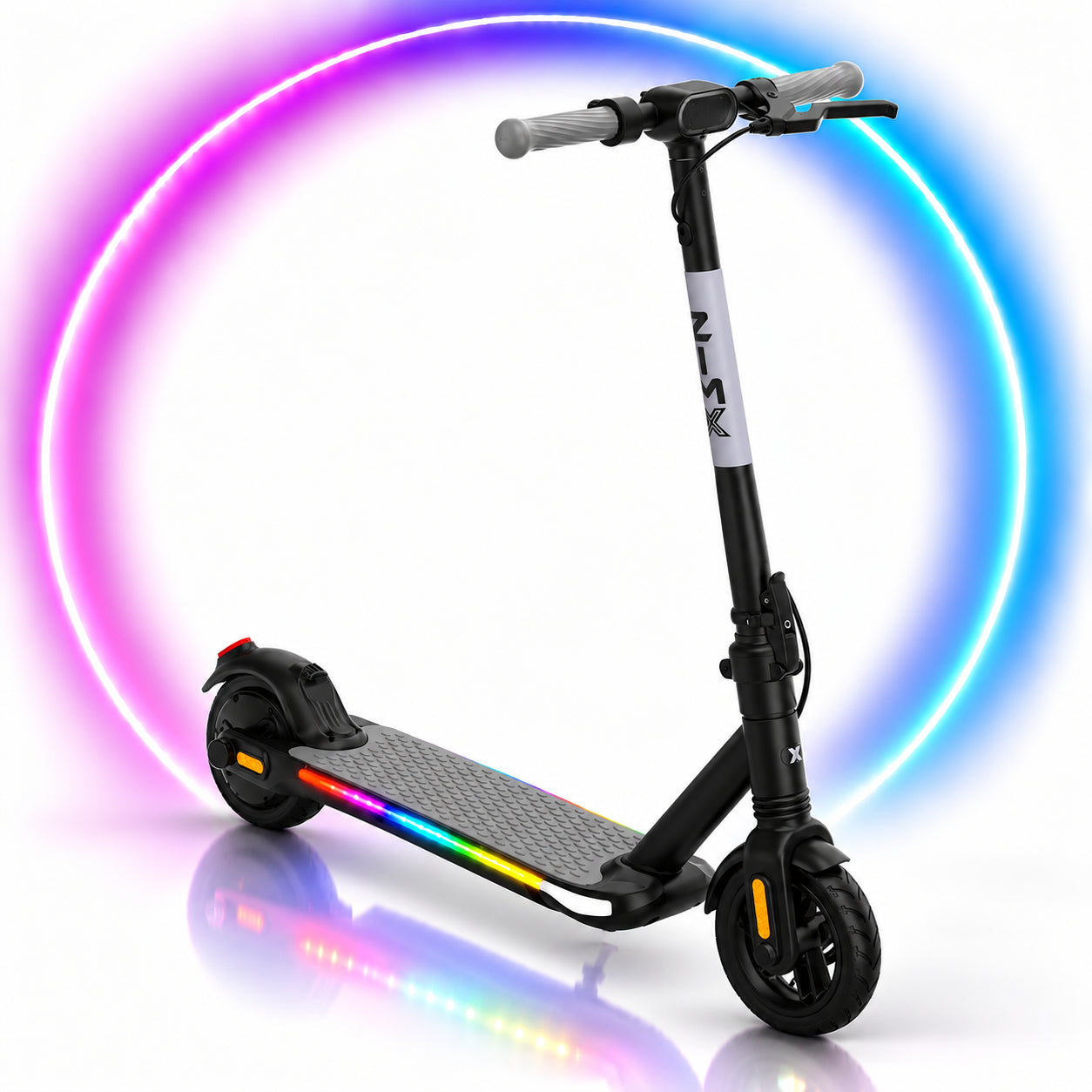
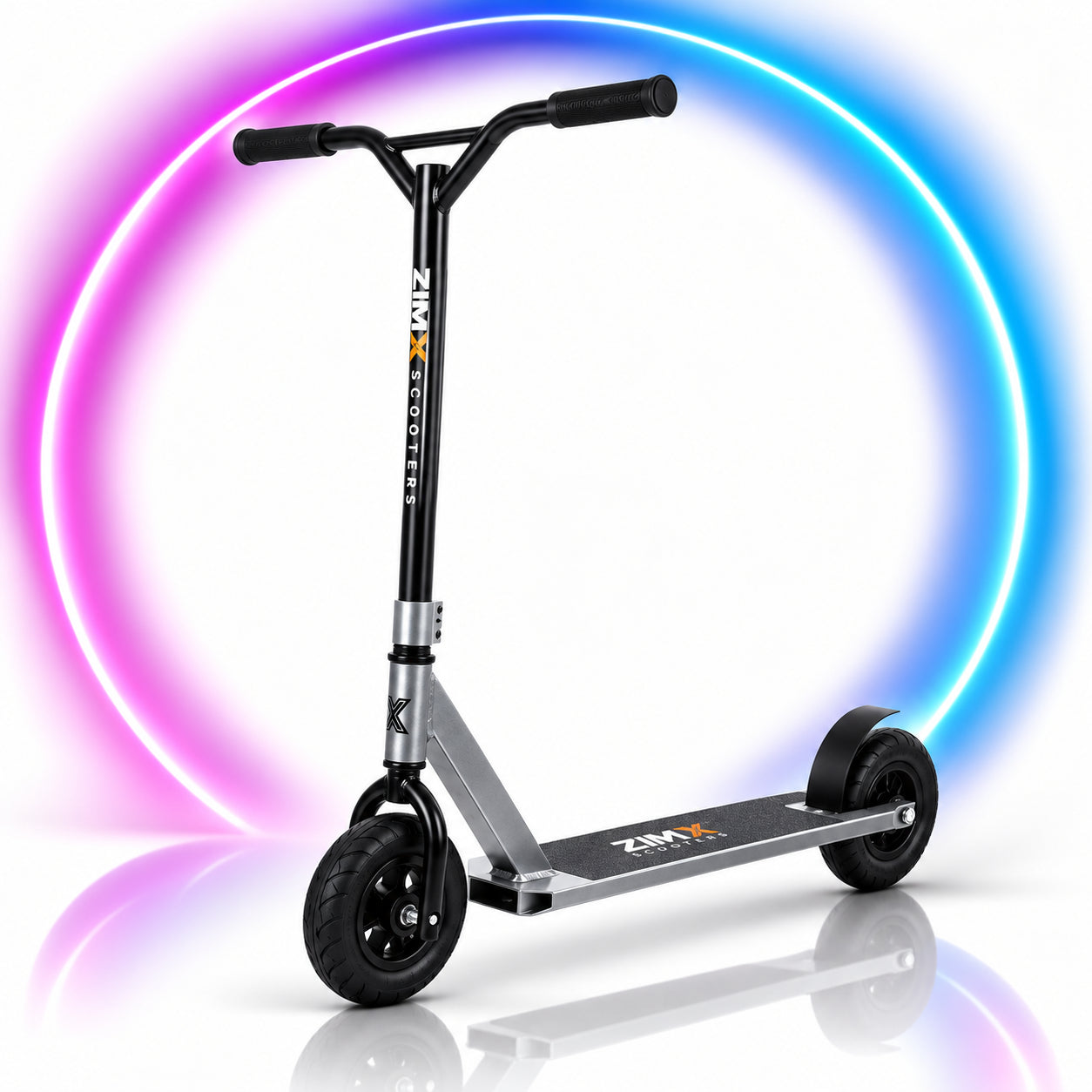
Both are UL 2272 certified, and our return and warranty policy sets out your cover before you buy.
Choosing a Scooter That Matches Where You Can Legally Ride
Choosing well starts with one question: where will it actually be ridden? If the answer is a garden or private land, a privately owned scooter is a sound buy. If you were hoping to commute on public roads, only a rental trial scooter is legal, and buying your own will not change that.
When you buy for private use, match the machine to the rider and the ground:
- Check the rider height and weight limits before ordering
- Choose solid tyres for gardens and rough ground
- Confirm certification such as UL 2272 for peace of mind
- Check the battery range against how long sessions last
You can browse the full ZIMX scooter range to compare models side by side.
The law is clear, but it is not a barrier to enjoying a scooter. Ride on private land with permission, choose a machine built for that ground, and the experience is safe and genuinely fun. ZIMX backs every scooter with UL 2272 certification, warranty cover and interest-free instalments, so you can buy with confidence. Get started with ZIMX and find the right scooter for your garden today.
Frequently Asked Questions
Can you ride a privately owned e-scooter on public roads?
No. A privately owned e-scooter cannot be used on public roads, cycle lanes or pavements. Under road traffic law it counts as a powered transporter, and it is not type-approved, registered or insured for public use. Riding one on a public road is an offence, and police can issue a fine, add penalty points to your licence and seize the scooter. The only lawful place to ride a private e-scooter is private land with the landowner's permission.
Can e-scooters be ridden on pavements or cycle lanes?
Rental e-scooters in a trial area may use cycle lanes and cycle tracks, but not pavements or footpaths. Private e-scooters cannot legally use either. Pavement riding is treated as illegal use regardless of who owns the scooter, and it puts pedestrians at risk. If you are unsure about a route, check whether the cycle lane is part of the trial area before you set off, and never ride on a footpath to link two legal stretches.
Do you need a driving licence to ride an e-scooter?
For rental e-scooters in a trial area, yes. You need a full or provisional driving licence, and you must meet the operator's minimum age. Private e-scooters have no licensing route at all, because they cannot legally be used in public. If you hold a provisional licence, check the rental operator's terms, since some require a full licence for certain schemes.
Can you be fined for riding an e-scooter illegally?
Yes. Police can issue a fixed penalty notice, add penalty points to your driving licence and seize the scooter. Other offences carry their own penalties, so check the current official guidance for the figures that apply. Enforcement varies by area, but the law applies everywhere. If you are stopped, stay calm, give your details and ask which offence is being recorded.
Where can you legally ride an e-scooter?
Legally, a private e-scooter can only be ridden on private land with the landowner's permission. Rental e-scooters can be ridden in a designated trial area, usually on roads and cycle lanes within that zone, subject to the operator's terms. Motorways are never permitted. A garden, a private yard or a field with permission is the safe option for a scooter you own, which is why many families treat them as leisure equipment rather than transport.
What should you do if you want to use an e-scooter for commuting?
Check whether your route falls inside a rental trial area first. If it does, hire a rental e-scooter, confirm you meet the licence and age requirements, and plan a route that uses cycle lanes rather than pavements. If it does not, a private e-scooter cannot legally fill that gap. For a short commute, a conventional bicycle may be the more practical choice.
